The Surprising Way To Price Your Membership With Confidence
There wasn’t one dramatic moment that changed how I thought about pricing. It was a gradual realisation, launch after launch, that I was always chasing the next hit of revenue.
Eventually I asked myself a simple question: if I still had to work like this in ten years’ time, would I actually enjoy it? The answer was no, and that’s what pushed me toward recurring revenue and membership sites.
What nobody warned me about was the next problem. Once you commit to a membership, you still have to decide what to charge for it. Get that wrong and it doesn’t matter how good the thing inside is.
If you’ve ever stared at a pricing page wondering whether your number is too high, too low, or just plain wrong, you’re not alone. Learning to price your membership well is a skill, not a guess, and it’s one almost nobody teaches properly.
Why A Number Can Feel Guessed Or Feel Considered
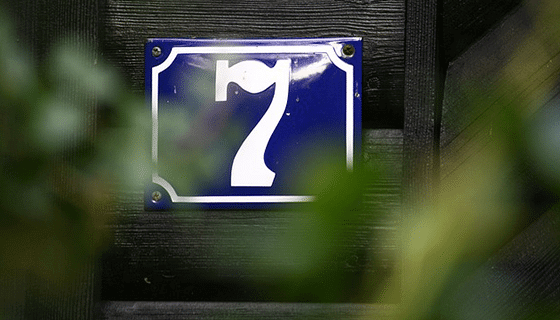
Look at the price of almost any serious online course or membership. Nine times out of ten it ends in a seven. $17. $47. $97. $197.
That isn’t an accident. A price ending in a round number reads as a guess. A price ending in a seven reads as something somebody worked out on purpose.
A price that ends in a round number feels guessed. A price that ends in seven feels considered.
This comes from decades of direct response testing, long before anyone had split testing software. It still holds up on a membership sign-up page today.
A membership that charges $29 reads as ordinary. The same offer at $27 reads like someone did the maths and landed on exactly the right figure, even though the gap between them barely covers a cup of coffee.
If your current price sits on a round number, nudge it to the nearest seven. It costs nothing to test, and it’s the simplest change on this whole list.
Crossing The Invisible Line In Someone’s Head
There’s a second layer underneath that one. Certain numbers act like fences in a buyer’s mind. Twenty dollars. Fifty. A hundred.
A membership priced at $20 a month gets filed under “cheap enough not to think about.” Priced at $21, it jumps into a completely different mental category, even though the real difference is a dollar.
Think about a membership sitting at $99 instead of $97. On paper it’s two dollars. In a reader’s head, it quietly slides from double digits into the territory of triple digits, and that’s enough to make them pause before clicking through.
So find the line your price sits closest to, and pull it back underneath. $20 becomes $17. $50 becomes $47. The product hasn’t changed.
How it gets read has.
I’ve seen this exact instinct show up in other places too, not just pricing, in other articles I’ve shared recently about how people make fast decisions when they feel unsure.
Give People One Clear Door, Not Five
If you ever offer more than one tier of membership, how you lay those tiers out matters almost as much as what they cost.
Don’t make all three options look equally important. Pick the one you genuinely believe serves most people best, and point at it directly. A short label. A line that says most members choose this one.
Picture a membership page showing Basic, Standard and Premium side by side, each with its own box and its own list of features. A reader scanning quickly has no reason to prefer one over another, so they often leave to think it over, which usually means they never come back. Label the middle option “Most members choose this” and the decision gets made for them before they’ve even weighed the features.
Give someone three equal-looking boxes and a lot of them will choose none of them. Give them one clear recommendation and most will take it.
Confidence in your pricing page often comes down to confidence in your own recommendation, not the number itself.
The Words Sitting Next To The Price
How you introduce a price shapes how it feels before anyone has even read the figure.
Words like price, cost and fee are accurate, but they frame the moment as something being taken from the reader. Words like join, invest or enrol frame the same moment as something being added to their life.
Picture two versions of the same sign-up button. One says “Pay $47 now.” The other says “Invest $47 and join today.” Nothing about the number has changed, yet the second version reads like a decision rather than a transaction.
You don’t need to hide what something costs. You just need to give your reader the right frame to read the number in, so it feels earned rather than sudden.
Turn A Big Number Into A Small One
This is the part most people underestimate, and it matters most for anyone running a membership rather than a one-off sale.
Left alone, a reader’s mind multiplies outward. A $27 monthly membership quietly becomes $324 a year inside their head, and that bigger number feels heavier than the value sitting behind it.
Point their attention the other way instead. $27 a month is less than a dollar a day. Say it that way and you’re no longer asking someone to weigh up a $324 commitment. You’re asking whether less than a dollar a day is worth it.
The price your membership conversation changes completely once you reframe it this way. Same number underneath. A completely different decision on top of it.
Someone Who Pays You Behaves Differently
One last thing worth knowing before you put any of this to work. Someone who hands over a card, even for a small amount, treats what they receive differently than someone who only ever downloaded something free.
Paying members read more carefully. They act faster. They stick around longer. Nick James has talked about this a good deal, the moment somebody becomes a paying member, however small the amount, it’s worth treating that person differently from everyone still sitting on your free list.
Think of the difference between someone who downloaded a free checklist and forgot about it within a week, compared to someone who paid $17 for the same information wrapped into a short course. The second person opens every email, finishes the material, and asks follow-up questions, because they’ve already told themselves the content matters enough to spend money on.
You don’t need a complicated system to start doing this. You just need to notice who paid, and follow up with them differently from everyone who hasn’t.
Small Changes, Compounded Over Months
None of what I’ve covered here feels dramatic the day you change it. A seven instead of a round number. One tier highlighted instead of three equal ones. A daily figure instead of a yearly one.
It adds up fast once a few months of recurring billing roll in, because every one of these small shifts is working on every single renewal, not just the first sale.
Membership income is supposed to be the steadier kind of income. The kind that doesn’t need another launch every few weeks. Getting the price right the first time is a big part of what makes that steadiness possible.
A membership earning $47 instead of $27 a month, across a thousand members, is the difference between a hobby and a real business, and it comes from exactly the kind of small adjustments covered here.
You already have something worth paying for. Now make sure you price your membership with the confidence it deserves.
Until next time, keep building.
SHANE
Calling All Frustrated Entrepreneurs –
Who Else Wants To Forget Selling 'Low Priced' One Off Digital Products Such As eBooks And…

Make Cash
Like Clockwork
Using A Passive Income System That Automatically Deposits Money Into Your Bank Account Effortlessly Every Month Instead.
Just enter your details below to discover how:
Privacy Policy: We value your privacy. You can unsubscribe from receiving future emails with 1 click at any time.