
3 Smart Questions To Ask Before You Build Your Next Product
Every week or so I get a version of the same message. Someone is thinking about starting a membership site, or they’ve nearly finished a course, and they ask me the same question: “How do I get customers?”
That question has an answer, and it’s simpler than most people expect.
It’s one of the phrases I hear most from people wanting to build a recurring income. And almost every time, it arrives attached to something that’s already half built. A product sitting in a folder. An idea they’ve been quietly working on for weeks, sometimes months.
You’ve probably felt that pull yourself, the urge to get something built before you’ve properly checked whether anyone is waiting for it.
Here’s the pattern I’ve noticed. Most people pick the idea first, build something around it, and only then start wondering who might pay for it.
That order feels natural. It’s also the wrong way round.
Before you spend another evening building anything, it helps to test the market first. That one shift tells you whether people will pay before you invest another week of your time, and it changes everything about what you build next.
The Question Everyone Asks Too Late
“How do I get customers?” is the wrong question to be asking once your product already exists. By that point, you’re trying to find buyers for something you’ve already decided to make.
The better question comes earlier: does anyone already spend money solving this problem?
I’ve written before about how I built my own business around recurring income rather than one-off launches. Other articles I have shared recently go into why that shift mattered so much to me. But none of it would have worked if I’d never checked whether people wanted what I was building in the first place.
If you test the market before you build, you get to skip the guessing entirely.
Nick James, who’s built a career on finding and selling proven products rather than inventing new ones, puts it plainly: the market always comes first, and the product comes second, never the other way round.
That’s not just abstract advice. It means checking a market before you spend even one afternoon designing a course outline, a membership area, or an email sequence.
A course outline written for an untested idea is guesswork, but a tested one already has customers waiting.
It’s a simple test, and most people skip it entirely.
I think that’s right, and not just for people licensing products. It applies just as much if you’re building a membership site, a newsletter, or a small course from scratch.
The Year I Kept Adding Products
There was a stretch of my own business where I believed the answer to growth was simply creating more. More products. More offers. More promotions running at once.
Much like someone building a business around a market they haven’t tested, I was adding without checking. I kept assuming that more choice meant more chances of a sale.
It didn’t work that way. The business became more complicated than it needed to be, and none of that complexity was helping me grow. It was slowing me down.
Eventually I realised I hadn’t been asking whether any one of those offers was properly wanted. I’d just been busy.
The same trap catches people before they’ve made a single sale. They build three ideas at once, hoping one of them lands, instead of properly testing one and knowing it’s wanted before they go any further.
If you’re tempted to build several ideas at once, pause and test the market for one before you touch the others.
You don’t need to make the same mistake I did. One tested idea, properly wanted, will get you further than three untested ones running at once, and it takes far less time to build.
Three Questions Worth Asking Before You Build Anything
Testing a market doesn’t need spreadsheets or expensive research. You don’t need a marketing degree to do this properly, just a willingness to look before you leap. It comes down to three honest questions.
Is anyone already paying to solve this problem? Search for existing products, memberships, or courses in the same space, the way you might look for freelancer budgeting newsletters if that’s your idea. A market with several active options, still selling, tells you people are spending money right now.
Can you find where these people already gather? A Facebook group, a forum, an email newsletter, somewhere you can spend an afternoon reading what people ask for. If you can’t picture where your future customers already spend their time, getting in front of them later will be far harder than it needs to be.
Would you be happy talking to this audience for years, not just weeks? Recurring income depends on sticking with the same group of people long enough for them to trust you. That’s much easier when you like who you’re serving, rather than tolerating them until the sale is made.
This doesn’t need to take long: a weekend of searching, reading and asking questions in the right places is usually enough to tell you whether an idea is worth building. If the market answers back with silence, that’s useful information too. It’s far cheaper to learn that now than after you’ve spent a month building something nobody was waiting for.
Small And Trusted Beats Big And Distant
Once you know a market is real, the size of the audience matters far less than most people think.
That’s freeing if you’ve been holding back because your list feels small.
I’d rather have 1,000 people who genuinely know, like and trust me than 100,000 who barely recognise my name.
I’ve seen people with enormous lists who struggle to sell anything, and others with a few hundred subscribers who build a profitable recurring income. The difference usually isn’t the size of the list. It’s whether the people on it trust what’s being sent to them.
That’s worth remembering if you’re worried you don’t have a big enough audience to start. You don’t need one. You need the right one, tested properly before you build anything for it.
Start With The Market, Not The Idea
You might be one of the people who’s told me “I can’t do tech” or “I don’t know how to launch a product.” Here’s something worth hearing: none of that matters if you haven’t checked there’s a market first.
Tech gets easier with practice. Launching gets easier once you’ve done it a few times. A clunky first attempt is still fixable, but no amount of skill fixes a product built for a market that was never really there.
Most people who feel held back by either one sort it out within the first few weeks of starting.
Test the market first. Build second. It’s a quieter, less exciting way to start a business than diving straight into building something, but it’s the one that gives you an actual reason to expect anyone to buy.
Start smaller than feels comfortable. Pick one problem, find the handful of people already paying to solve it, and ask what they’d want from you specifically. That’s a far steadier way in than guessing at a whole course or membership site and hoping the market catches up afterwards.
The tech and the launch mechanics can be learned along the way, and most people manage it eventually. What can’t be learned or fixed afterwards is a market that was never really there to begin with.
That’s the whole shift, really.
Until next time, keep building.
SHANE
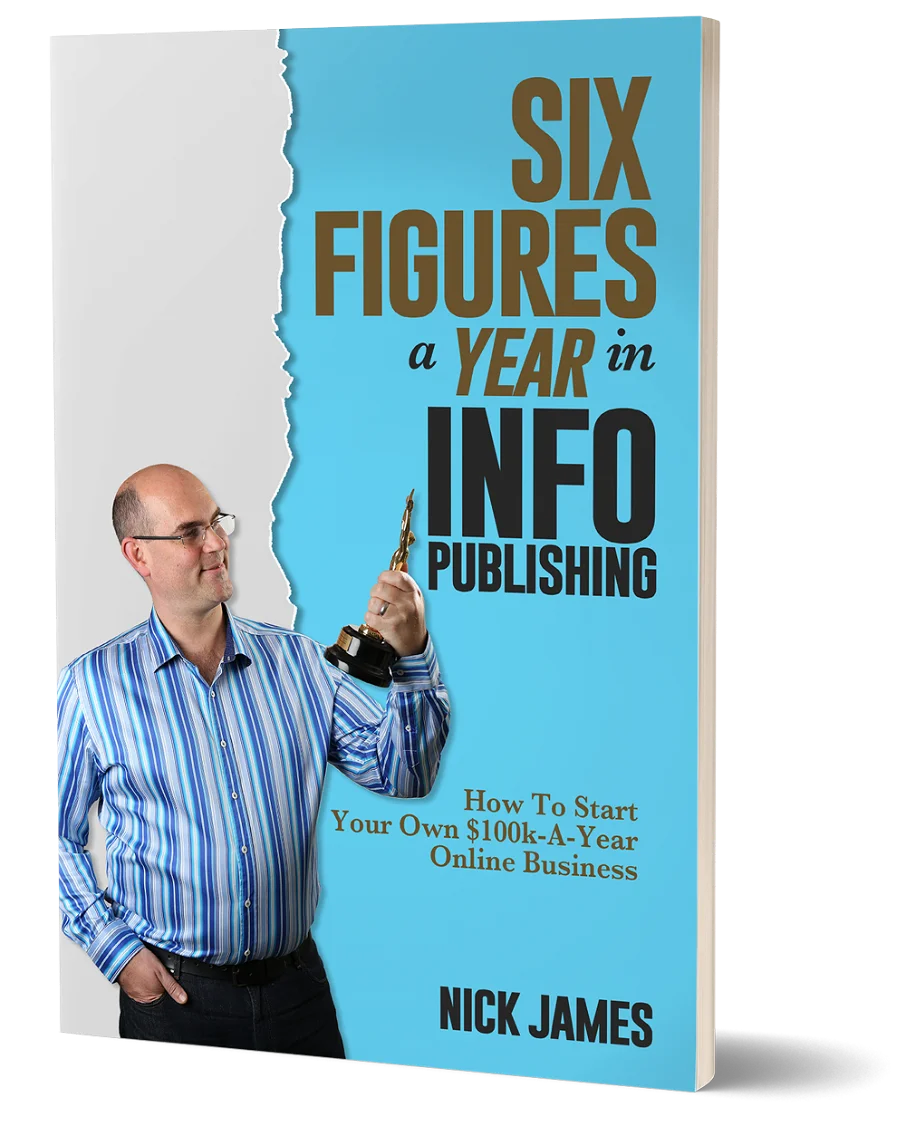
Author offers a FREE copy of this book to his next door neighbor... to prove he's not a drug dealer!
Now claim your FREE COPY.
and follow the step-by-step instructions for making the kind of money (and living the kind of lifestyle) that'll get your neighbors curtains twitching with curiosity!
Enter your details below to discover how to claim your FREE COPY of 'Six Figures A Year In Info Publishing' ...
Privacy Policy : We value your privacy. You can unsubscribe from receiving future emails with 1 click at any time.